Zooming into Andromeda galaxy realm
OBJECT
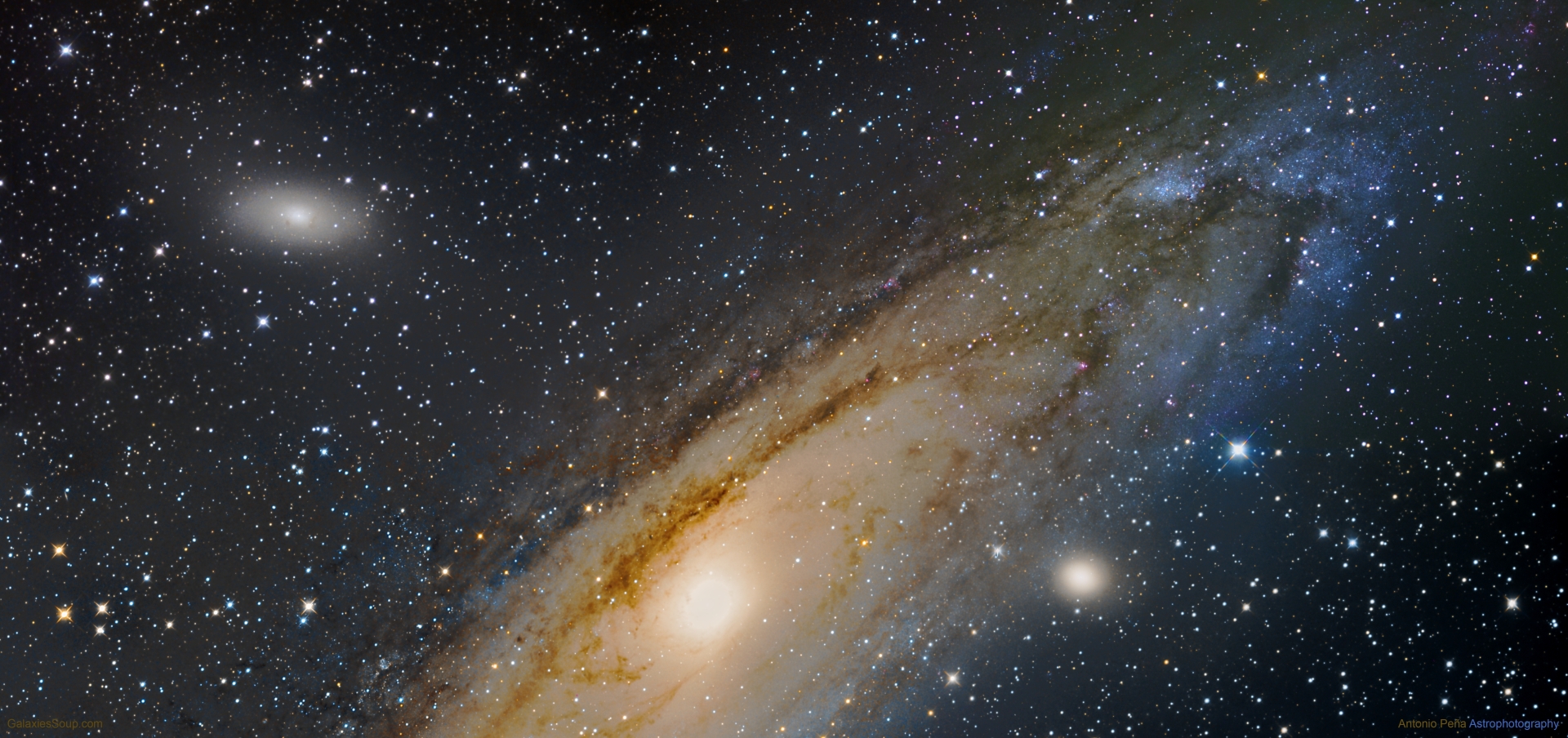
Andromeda is the nearest galaxy to the Milky Way at a distance about 2.5 million light-years, and is the largest galaxy in the Local Group.
Andromeda contains roughly one trillion stars, making it even more massive than our Milky Way galaxy.
Historically, Andromeda has been known since ancient times since the galaxy can be observed with naked eye under dark skies. It was first recorded in writing around the year 964 by the Persian astronomer Abd al-Rahman al Sufi, who described it as a “small cloud”
In 1764, Charles Messier catalogued it as M31, believing it was a nebula. Its true nature as a galaxy outside the Milky Way was not confirmed until the 1920, when Edwin Hubble measured the distance to the galaxy using Cepheid variable stars. This discovery proved that the universe contains many galaxies beyond our own, fundamentally changing our understanding of the cosmos.
Due to the relevant size of the object in the sky, six teselas have been required to complete the whole composition.
The prominent Messier M32 and Messier M110 are satellite galaxies that also appear on the image.
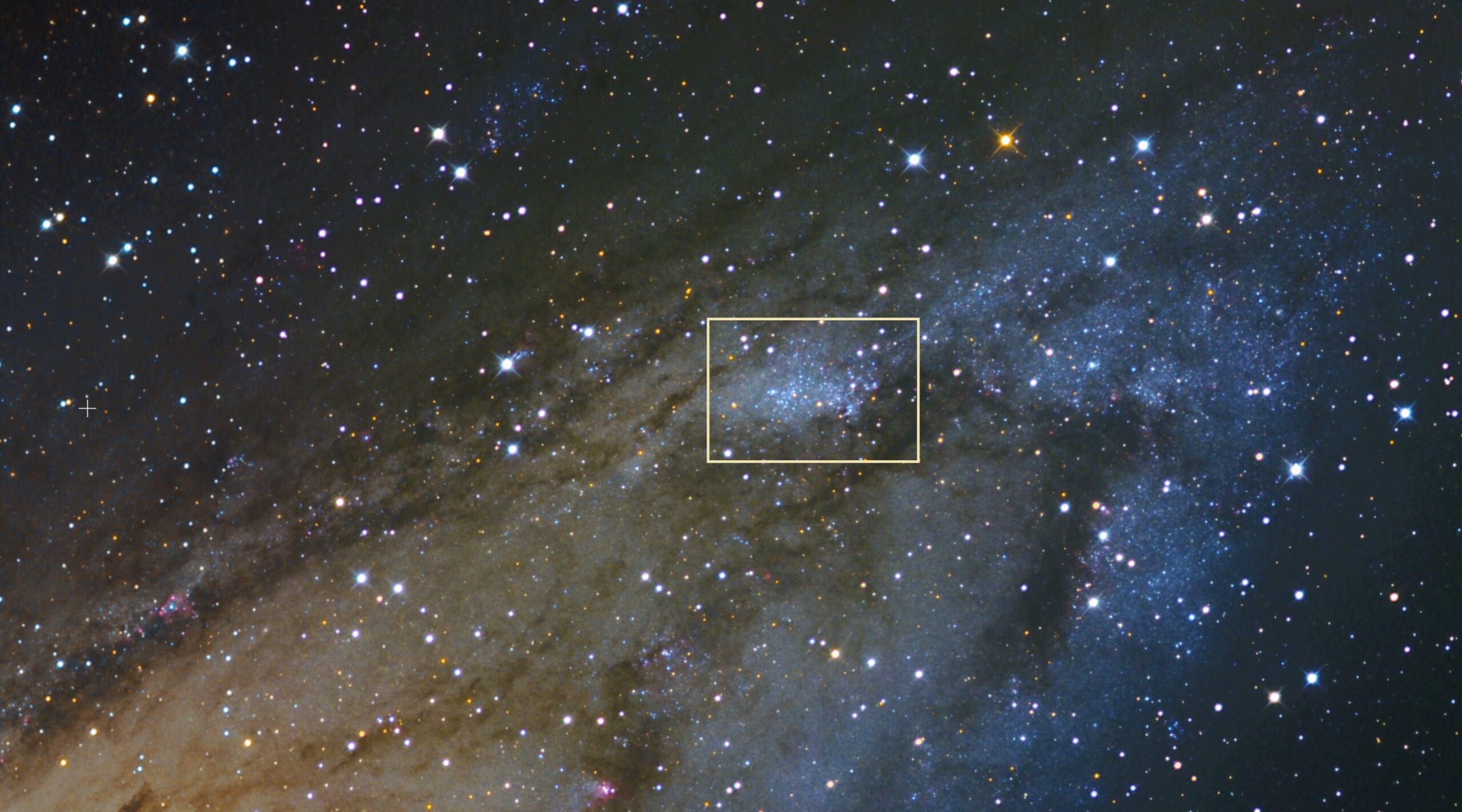
The star cluster NGC206 is captured too. This is a massive star-forming region. Many blue giants in this cluster are individual resolved stars on a galaxy different from ours. Imaging individual stars of other galaxy is a relevant milestone for an amateur.
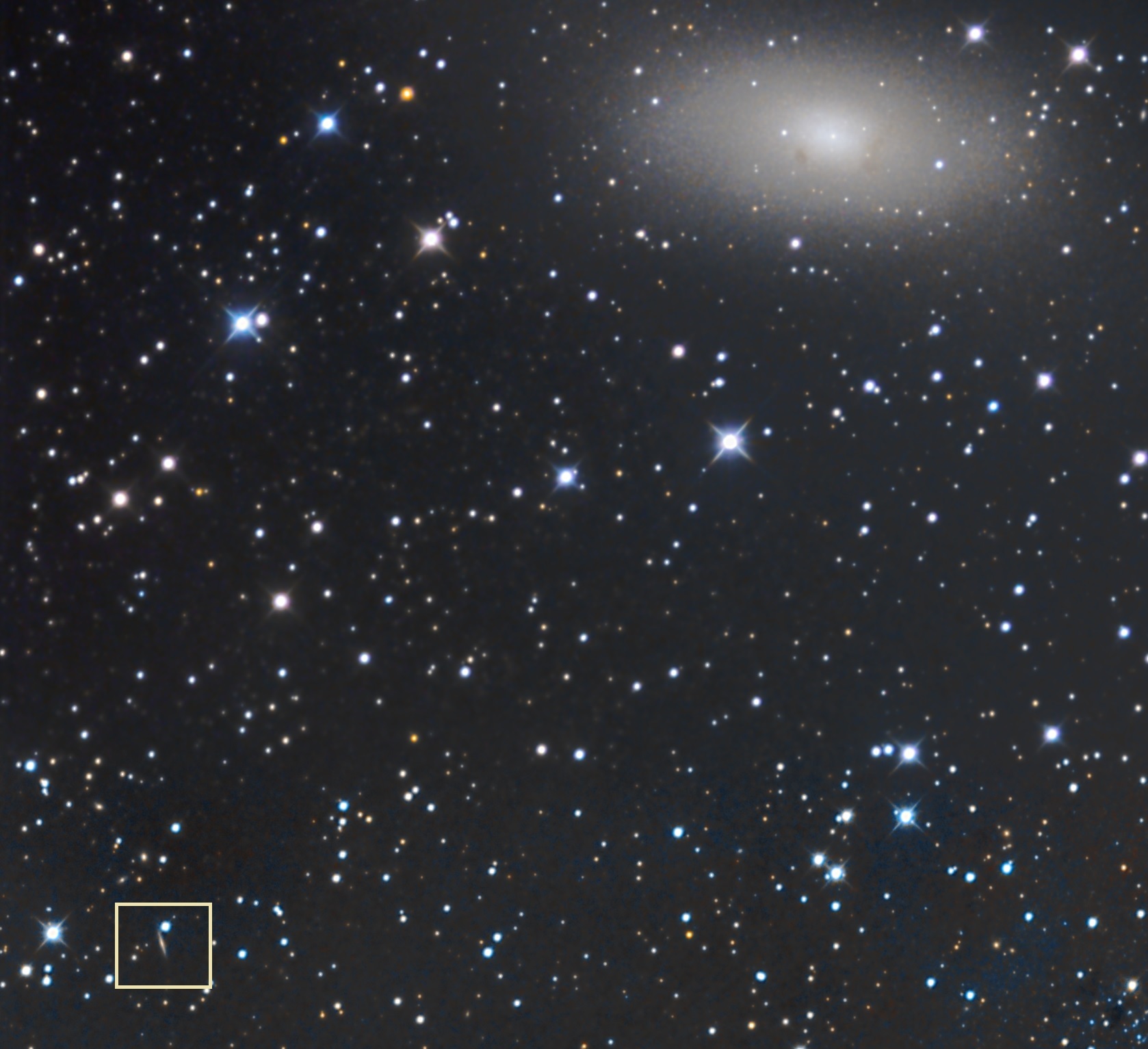
The faint fuzzy object PGC90494 is a background galaxy at about 680 million light-years. Its magnitude is 17.6. It is breaktaking to collect photons from such a distant object.
TECH DATA
Optics: Ritchie-Chretien GSO RC10 f/8 scope
Camera: SBIG STL-6303
Exposure details:
The whole image is a LRGB composition of six teselas :
– Luminance: 53, 42, 48, 40, 44, 36 images per tesela, respectively.
600 seconds each image using L filter (binning 1x1) (2630 minutes)
– Red channel: 15, 14, 11, 18, 10, 13 images per tesela, respectively
300 seconds each using R filter (binning 2x2) (405 minutes)
– Green channel: 19, 21, 11, 9, 18, 10 images per tesela, respectively
300 seconds each using G filter (binning 2x2) (440 minutes)
– Blue channel: 19, 28, 17, 23, 13,18 images per tesela, respectively
300 seconds each using B filter (binning 2x2) (590 minutes)